Water Quality Testing

Water quality is defined by measurable parameters that directly affect safety, performance of filtration systems, and long-term health impact.
Typical tap water may contain dissolved solids, heavy metals, chlorine, bacteria, and organic compounds. These are evaluated using the following key metrics:
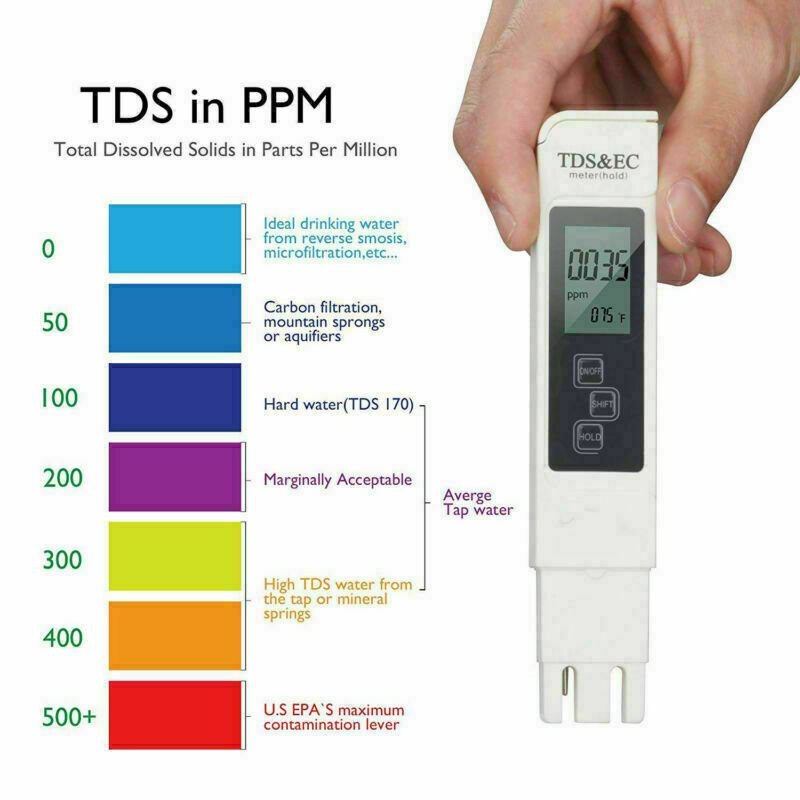
• TDS (Total Dissolved Solids)
Measured in ppm (mg/L). Indicates the total concentration of dissolved minerals and salts.
- Typical tap water: 150–500 ppm
- After reverse osmosis: 5–30 ppm
• pH Level
Measures acidity or alkalinity (scale 0–14).
- Drinking water standard: 6.5–8.5
- RO water typically: ~6.0–7.0
• Chlorine (Cl₂)
Added for disinfection but affects taste and may form harmful byproducts.
- Typical tap water: 0.2–1.0 mg/L
- After carbon filtration: ~0 mg/L
• Hardness (Ca²⁺ / Mg²⁺)
Measured in mg/L or °dH. Causes scale buildup and reduces appliance lifespan.
- Soft water: <60 mg/L
- Hard water: >120 mg/L
• Heavy Metals (Pb, Hg, Cd)
Present in trace amounts from pipes or contamination.
- Lead (Pb) limit: <0.01 mg/L (WHO guideline)
• Conductivity (µS/cm)
Correlates with TDS. Higher values indicate higher ion concentration.
🔧 Measurement Tools
Water quality can be quickly evaluated using:
- TDS meter – instant reading of dissolved solids
- pH meter – accurate acidity measurement
- Chlorine test kit – residual disinfectant levels
- Laboratory analysis – full spectrum (metals, bacteria, VOCs)
⚙️ Why It Matters
Understanding these values allows proper system selection and filter configuration. Reverse osmosis systems can remove up to 95–99% of dissolved contaminants, depending on membrane quality and pressure conditions.